Whether your audience wants to learn how to run a business or simply advance in their career, they will always turn to specialized business blogs for advice.
Wednesday, 8 April 2026
New Post from The World's Best Gardening Blog for 04/08/2026
Google “pollinator plants,” and you’re likely to get a list that looks something like this: Agastache
Allium Basil
Beebalm
Borage
Butterfly bush
Catmint Echinacea Lantana
Lavender Liatris
Lobelia
Milkweed
Oregano
Russian sage Salvia Verbena
Zinnia
Grow these plants, and you’re likely to see a lot of pollinator action.
Look a little closer, though, and you may notice this pollinator garden isn’t all that it could be.
First of all, these plants will attract a preponderance of honey bees. Honey bees are problematic. They’re not native, and they can compete with our native bees for resources. Also, they can spread diseases to our native bees. In my garden, I consider honey bees to be kind of a nuisance, despite the PR campaign by Big Honey to convince us otherwise. We don’t need to encourage honey bees in our gardens. Our country’s nearly 4,000 native bees are the ones that need our help.
Second, these plants are primarily nectar plants. Now, nectar is important to bees—our most effective pollinators. It supplies carbs in the form of sugars to fuel flight and other physiological functions. But nectar isn’t in short supply in most gardens. Any assortment of flowers is likely to provide a good deal of nectar. Plant the flowers you like, and you’ll probably have a good supply of nectar.
Pollen is another story. Pollen is essential to bees, and it isn’t always abundant in gardens. Pollen provides protein. Adult female bees need this protein to help complete the development of their reproductive systems. Adult male bees eat a little pollen, too. But, primarily, pollen is food for baby bees. They need the protein and other nutrients in it to develop into healthy adult bees.
Nectar brings bees to your garden for a quick energy drink, but pollen enables them to reproduce and thrive.
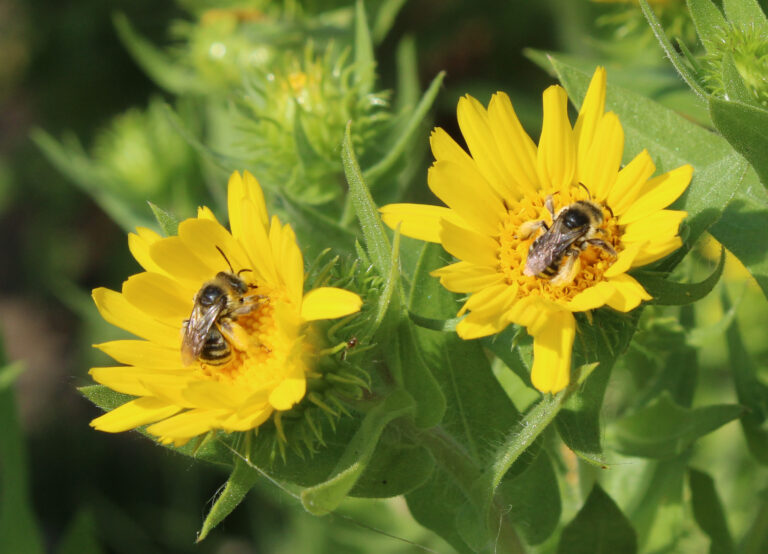
Many specialist bees require pollen from aster-family plants, such as this gumweed (Grindelia integrifolia).
Some bees are very particular about what kinds of pollen they feed to their babies. They only collect pollen from one family of plants—or in some cases, only one genus, or even just one species. These are called specialist bees, and they comprise about 30 percent of our nation’s bees. Many of these bees require plants in the aster family, such as asters, goldenrod, sunflowers, and gumweed (Grindelia). Other specialist bees here in the Pacific Northwest may require willows (Salix) or native Vaccinium species to survive.
Most of the bees in our gardens, however, are generalist bees. They collect pollen from many different plants. Now, even though generalist bees aren’t picky eaters, they do have preferences.
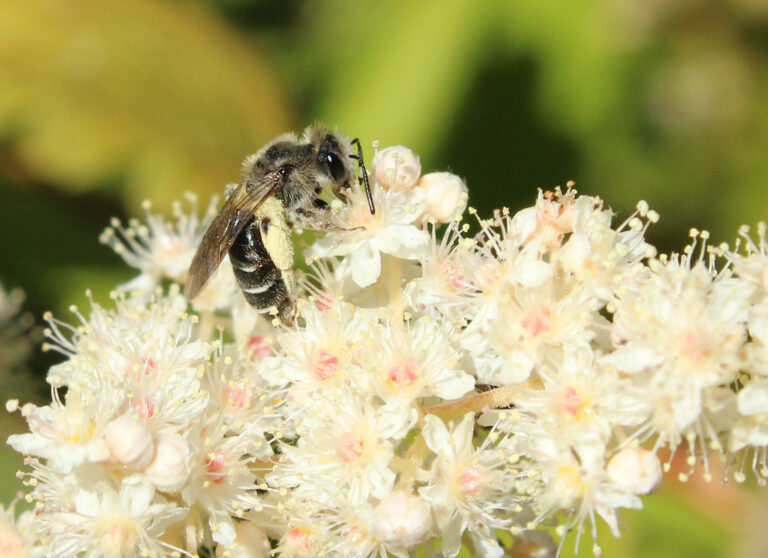
A bee collects creamy-white pollen from my oceanspray (Holodiscus discolor).
I’ve been watching the bees in my Portland garden for a few years, and I’ve come up with a pretty good pollinator plant list of my own. It is by no means an exhaustive list, but it’s a list of plants I’ve actually seen bees collecting pollen from in my garden—not just nectar. Grow these plants, and you’ll not only give bees the carbs they crave, but also the protein they need to maintain healthy populations.
July–August Aster-family plants, such as:
Puget Sound gumweed (Grindelia integrifolia)
Elegant tarweed (Madia elegans)
Goldenrod (Solidago)
Sunflowers (Helianthus)
Pearly everlasting (Anaphalis margaritacea)
Also, late-sown batches of lacy phacelia, honeywort, and California poppy
September
Pollinator activity plummets in September here in Portland. I do have ‘Fireworks’ goldenrod, asters, and a smattering of annuals and late-blooming perennials for the stragglers.





No comments:
Post a Comment