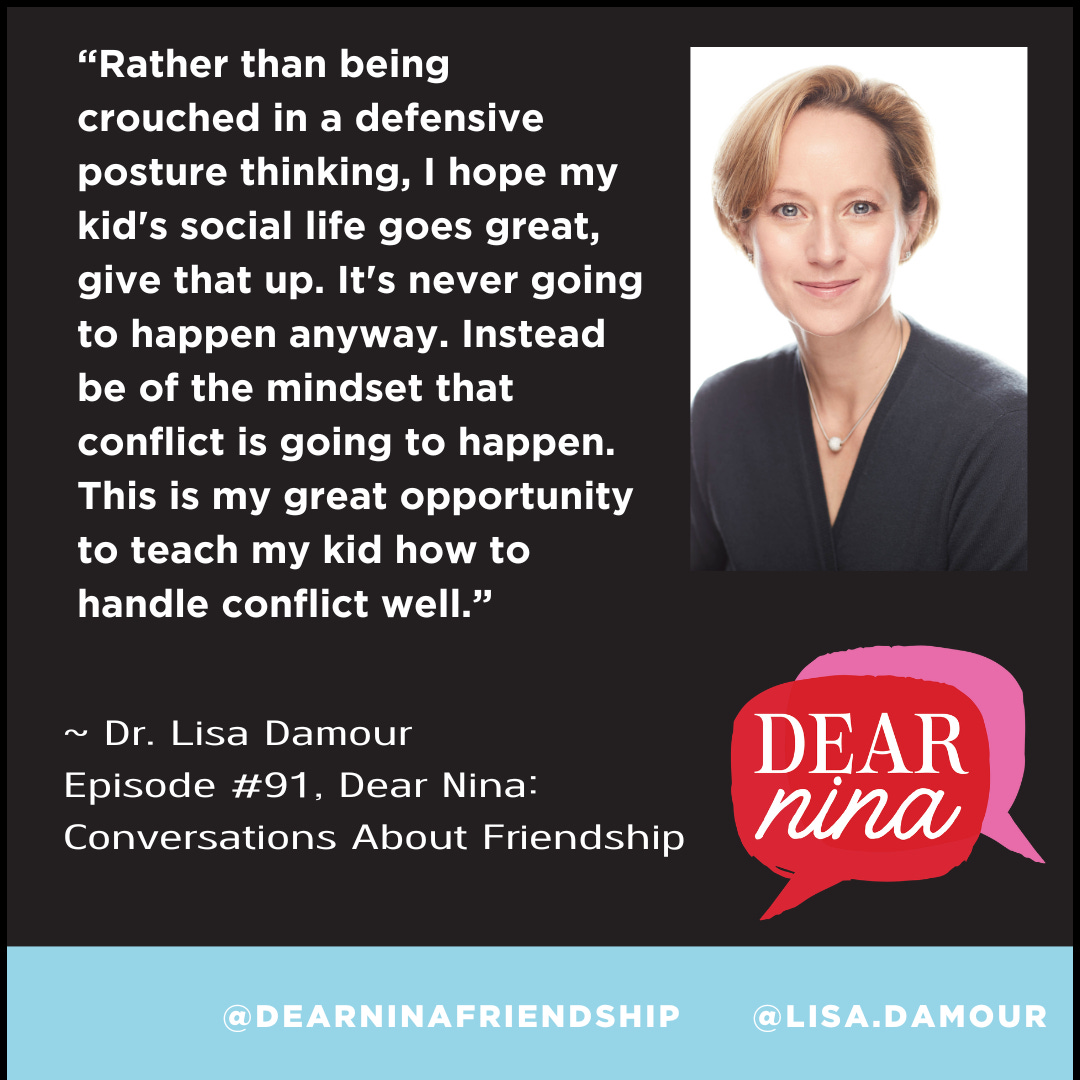
Every six weeks I post an anonymous “Dear Nina” friendship letter with my answer. Those posts are usually a perk for paying subscribers, but this one is for everyone because it’s so relevant to the latest Dear Nina podcast episode. AND because I feel so strongly about my answer. You can see the collection of previous anonymous letters here if you’re curious about what I’ve covered in the past. Why Big Friend Groups Often FailBefore we get to the anonymous question: This week I replayed a previous episode with Dr. Lisa Damour, including a new introduction with some new thoughts. It’s a short and helpful episode about friend groups, helping teens handle friend conflict, and a few more gems. Dr. Lisa packed a lot of wisdom into less than 25 minutes.
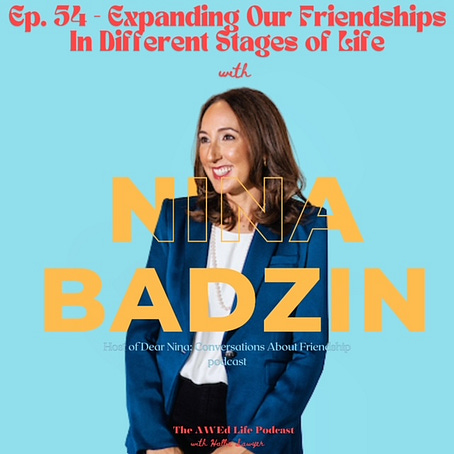
Advice for Midlife Socializing—Especially for Empty NestersI met Hallie Sawyer, of The Awed Life Podcast, about 12 years ago in our earlier writing lives. I had a blast helping Hallie think through ways to meet new friends now that she’s almost an empty nester. I felt she was looking in the wrong place. You’ll have to listen to the episode to understand why I said that! Hallie made such a nice graphic for the episode below. That’s a GOOD friend and host!
Branching Out of a Friend GroupDear Nina,
Dear Concerned,This is an excellent question and one that’s oddly fitting with my current episode. And oh yes, I have lots of thoughts. Dr. Lisa Damour, this week’s guest, has spoken in her own podcast about having a personal policy of not being friends with the parents of her kids’ friends for this exact reason. I would find that a little unrealistic in my life, but I get where she's coming from. Because yes, it does get tricky when you see that your friends’ kids are treating your kid unkindly. BUT, trust me on this, there will come a time when your own kid doesn’t want to hang out with your friends’ kids, and then you might feel sheepish, guilty, or as if you owe your friends an apology for your kid’s behavior. Please note: I do not feel that parents need to apologize for the their kids acting like normal tweens and teens who are navigating the totally normal life stage of figuring out how to do friendship. More on that in a moment. I’m so torn on your situation in particular because I hate to see you distance yourself from somewhat longterm friendships, which are hard to replicate. There’s a special quality about friends who have known you and your family for a decade or more. However, the only way this friend group of adults works is if there is some kind of frank conversation where it’s acknowledged that your kids will not always be friends. It’s almost like all the adults have to agree that kids WILL get left out, kids WILL grow apart, and you will all stay out of it. Upper elementary will seem like a dream compared to the next few years. Adult friends should safely assume that nobody is cheering on their kids to be a jerk. Most parents say something to their kids like, “What about Emily?” or whichever kid wasn’t invited. That said, I don’t think parents should force friendships at the upper elementary, junior high, and certainly high school level. I’d hate to see a kid get a pity invite all the way through junior high to please the parents, only to find by 9th or 10th grade that they’ve wasted time not developing friends elsewhere. It’s normal to feel disappointed when the kids’ friendships don’t work out, but to end the adult friendships over it should put the quality of that adult friendship into question. Were you really friends to begin with? Perhaps that question is fair here. Each case is different. But yes, also branch out! (You and your kid!)It’s always good advice not to have all your friendship eggs in one basket. That’s true for you and your kids. Ideally, their after-school activity friends are different from school friends, and different from camp friends if they go to day camps or overnight camps. That’s not always possible, but it’s wonderful when there are other places for your kid to turn. When kids are dropped from one group (either suddenly or slowly) but they have a few good buddies from other parts of their lives, it’s hard for them, but not a crisis. This applies to adults too. We want friends who share our different interests. We have layers to what make us who we are; our friends should reflect that reality. We cannot get everything we need from one person or one group. In conclusion:YES, branch out. But it also might be time for a conversation with your crew, forcing everyone to acknowledge that your friendships have to exist apart from anything happening with the kids. Say aloud that you’re all doing your best to raise kind kids, but those kids are also human beings. And adolescent humans have to experiment, on their own, with making, keeping, losing, and forgiving friends. I hope that helps! Good luck and report back if you can! Nina Have a friendship dilemma?You can tell me about it, anonymously. See past anonymous letters here. Catch up on all podcast episodes of Dear Nina:You can find episodes on all platforms linked here. Let’s Connect!I’m also on Instagram and TikTok. It’s not natural for me, but I’m trying to have fun there. My favorite social media home will always be the Dear Nina Facebook Group. Join us there for posts and chats about books, TV, recipes, and of course, friendship, You’re a free subscriber to Dear Nina: Conversations About Friendship. For anonymous friendship dilemmas and my answers, and to show support for my work, become a paying subscriber.
|
Friday, 29 March 2024
Branching Out of a Friend Group








Subscribe to:
Post Comments (Atom)
Be the reason your neighborhood is friendly
Wish your area was more welcoming? You might be the solution. ͏ ͏ ͏ ͏ ͏ ͏ ͏ ͏ ͏ ͏ ͏ ...

-
Lit Hub Excerpts posted: " I went to work and a guy I wait on said he was leaving. He said everyone he knew was pu...
-
Sheri K posted: " #*insert person/company name*isoverparty or #*insert person/company name*iscancelled How often do you ...


No comments:
Post a Comment