It's that spooky frisson that makes you, for a split second, want to throw your book across the room. Or chuckle. Or flail, blindly, for the familiar barrier between storyworld and readerworld—you know, your world. There's nothing as electric as an experimental flourish executed well, and metafiction (defined, loosely, as fiction which draws attention to its own structure or nature) has long been fertile ground for literature's rule-breakers and boundary-pushers.
My debut novel, At The End Of Every Day, revolves around a similar experiential layering of lore: a peculiar woman named Delphi must reckon with secrets looming in the shadows at the theme park where she works, one which has had to shut its gates after the death of an actress following an incident on a ride styled after one of the starlet's films. Narrative metalepsis (which concerns "transgressions" of boundaries between narrative levels within any given story; the way your favorite book-within-a-book and film-within-a-film interacts with their reader or viewer) is also the subject of my doctoral research, so perhaps it goes without saying that metafiction has been injected into my veins of late… and somehow I'm not sick of it yet!
From the imaginary documentary inside a dead neighbor's trunk, to the King of Zembla, these works of metafiction span decades, but embody the same truth: that stories are just more fun when they blur the lines of fiction and reality.
*

Pale Fire by Vladimir Nabokov
When French-narratology-Daddy Gérard Genette first wrote about the concept of paratext, he did so with taxonomies in mind, the whole "spatial, temporal, substantial, pragmatic, functional" of experimenting with story. Did he know how fun playing with paratext—the stuff situated around primary text, like indexes and epigraphs—could be? Well, Nabokov did! And he showcased it best in Pale Fire, amid the faux-footnotes that uber-keen editor Charles Kinbote has packed into his publication of the magnificent epic poem by former colleague John Shade (all of whom are, of course, fictional.) Oh and those footnotes? About triple the length of the poem itself, and in them we watch the psyche of this editor—Shade's... protégé? Fellow emigre? Would-be lover, perhaps?—unfurl and combust while he recalls the history of his long lost nation of Zembla, and the fate of its monarchs.
I've long said that if Nabokov were alive today he'd be writing for Clickhole. Or Adult Swim. Or any of those vehicles for skewering contemporary culture by way of cross-genre hijinks. And for those readers who live for that flavor of experimentation, Pale Fire remains an absolute treasure trove.
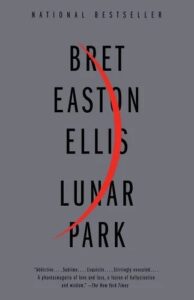
Lunar Park by Bret Easton Ellis
The year is 2006. Gnarls Barkley is top of the charts. Serbia and Montenegro have gone their separate ways. Everyone's mad about Pluto. And I, home from my second year at a university in Scotland, decide to soak up the California sun with a new book—a memoir by an author I feel I really should know more about. The author is Bret Easton Ellis. The "memoir" is Lunar Park.
The first few pages promise a fun read: Glimpses into the kinds of food, drugs, and sex you would encounter if you were a young literary star in the 80s. Then, some candor about the anticlimax of middle age, relationships of convenience, and parenthood.
And then the furniture starts moving.
I hate to admit how long it took me to understand Lunar Park's central gambit: that it masquerades as memoir before shifting seamlessly into Stephen King-style horror. But when the realization did eventually dawn upon me, it left me totally titillated. Hell yeah! I thought. Genre experimentation that made a total rube out of me! So I was surprised to find that Lunar Park was one of Ellis's most poorly received works, and I'll always go out of my way to defend it. It's ambitious, playful, and deeply fucked up—you know, all those things we love about Ellis (even when he's proven himself to be a bit difficult to love...)
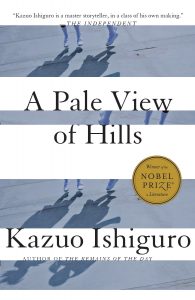
A Pale View Of Hills by Kazuo Ishiguro
An invitation for purists: Fight me on this. I'll be waiting out back by the dumpsters. A Pale View Of Hills is metafiction.
And it all comes down to one word. A pronoun, to be precise, that appears in the last 20-odd pages of Ishiguro's first published work. The novella is a dreamy and haunting recollection of a Japanese woman named Etsuko's time post-war Japan before she emigrated to Britain, where her eldest daughter has recently died by suicide. I choose my words very carefully there: a recollection. What Ishiguro gives us is an ephemeral memory masquerading as a story, and when that pronoun drops, in passing, spoken to a frightened child in the woods, we the reader realize how terribly remiss we have been in putting any degree of implicit trust in a narrator.
The result is a sifting of Ishiguro's authorship, Etsuko's perplexing past, and the lurking inexorability of history. It's a layer cake of narrative and trauma where, tonally, we find the material Ishiguro explores in greater depth in The Unconsoled, where he goes absolutely hog wild on the elusive realm between lived experiences and dream state. But never is he more spare and more able to deliver a gut-punch than in APVOH; it remains one of the few books that I keep multiple copies of on hand, such is the frequency with which I lend it out to friends and colleagues.
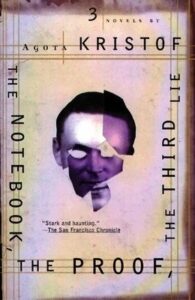
The Notebook by Agota Kristof
The Notebook by Agota Kristof delivers a haunting portrayal of human nature and the grim realities of war, which centers on brothers Klaus and Lukas in the middle of what we must assume to be the Second World War, though nations and factions are never actually named. (Wordle players will surely find some significance in those boys' names…). But the first in Kristof's trilogy of the same name feels less like watching two boys come of age than like watching a two-headed farm animal floating in formaldehyde: cold, enigmatic, macabre, and utterly engrossing.
The diaries in which the boys write during their youth are kept in a case in their grandmother's rotting home as bombs fall around them, houses burn, townspeople reveal their barbarism and, occasionally, if you squint a certain way, their humanity. But where you—you—fit into all that is the metafictional artery that runs through this riddle of a book, revealing itself at points throughout the three novels (The Notebook, The Proof, and The Third Lie) and walloping you right at the end. It's an intricate and thought-provoking narrative device that draws you further into the desensitizing quality of war, and the way in which whole worlds—even ones we've built in fiction—can meet a violent end.
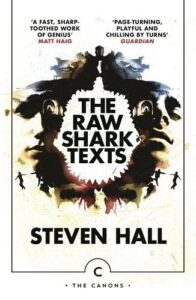
The Raw Shark Texts by Steven Hall
Raw Shark Texts could have easily fallen into that category of frenetic, artfully cartoonish introspective journeys toward a Millennial masculinity, à la John Dies At The End or Scott Pilgrim. (An excellent category, to be sure!). But British author Stephen Hall maneuvered his debut novel into a kind of gamification that's often hard for books—especially works of literary fiction—to pull off.
The story follows Eric Sanderson, who suffers from cyclical memory loss and encounters a conceptual, yet hyper-violent "Ludovician shark" in his search to learn the fate of his fiancee, who went missing on a vacation in Greece. Metafictional finesses abound here, within the pages of the book itself, including a phenomenal moment of trickery involving a description of a man coasting atop the still waters of a lake, awaiting a physical and psychic reckoning with a shark which… implicates? Curses? the reader themself.
But then there are the "unchapters," narrative "negatives" (as in, photo) that exist outside the pages of the book, in both the physical world and online: 36 extra chapters which add dimension to Sanderson's beautiful, sad, and occasionally confounding journey. To this day, readers have only stumbled upon a few unchapters in the wild, while the majority remain hidden. Regardless, by granting readers an active role in shaping the novel's ongoing journey, which now looks more like an ARG (Alternate Reality Game) than anything else, Hall has firmly established himself as a master of transmedial art and gripping storytelling.
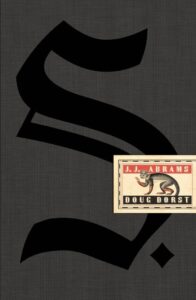
S. by J.J. Abrams and Doug Dorst
And speaking of ARGs, S. (as in Plutarch's Ship of Theseus) takes the concept of a book and transforms it into a multi-layered game-like experience. Presenting itself as a meticulously designed "library book," the book-object itself comes complete with Dewey Decimal stamps and an abundance of narrative artifacts—loose sheets of notes, a postcard, and an intriguing exchange of scribbles in the pages itself. These marginalia reveal a correspondence between two students, Eric and Jen, who become deeply engrossed in unravelling the enigmatic life and death of the book's author, V.M. Straka.
The intertwined tales of Eric, Jen, Straka, and you the participant create a captivating web of intrigue and mystery, inviting readers to actively engage with the text and participate in the immersive mystery. It's as fun as, well, a film by Abrams—who has described his and Dorst's ultimate goal with the book as creating a "kind of diabolical sudoku."
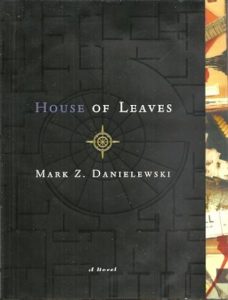
House Of Leaves by Mark Danielewski
Did you really think there could be a list of notable metafiction without the G.O.A.T. of all stories-within-stories? House of Leaves follows a down-and-out Los Angeles playboy named Johnny Truant who begins to lose his mind after discovering a trunk in his deceased neighbor's apartment, which holds a remarkably intricate essay on a documentary film about a house that's three quarters of an inch longer on the inside than on the outside. Oh, and that film? Johnny can find no evidence of it ever existing. But the house depicted within that film? It begins to sprout doorways.
What follows is a metafictional extravaganza: think narratives that interrupt one another through footnotes, ciphers, riddles, and a metaphorical (or is it?) minotaur. Text itself flips upside down and inside out, leading to a preponderance of interpretations about those nested realms within realms. Rumor has it that Danielewski passed around typed pages of his early drafts in underground raves in the 90s, iterating HoL for years until it landed in its present incarnation: a chilling and masterful magnum opus that's grown a cult of decipherment that rivals Swifties.
__________________________________
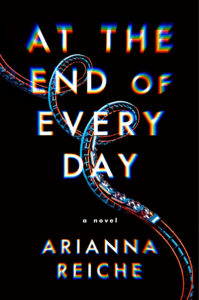
At the End of Every Day by Arianna Reiche is available from Atria Books, an imprint of Simon and Schuster.




No comments:
Post a Comment