
How I Created a Successful Podcast About FriendshipStep-by-step podcasting advice, including everything I'd do differently (or the same)
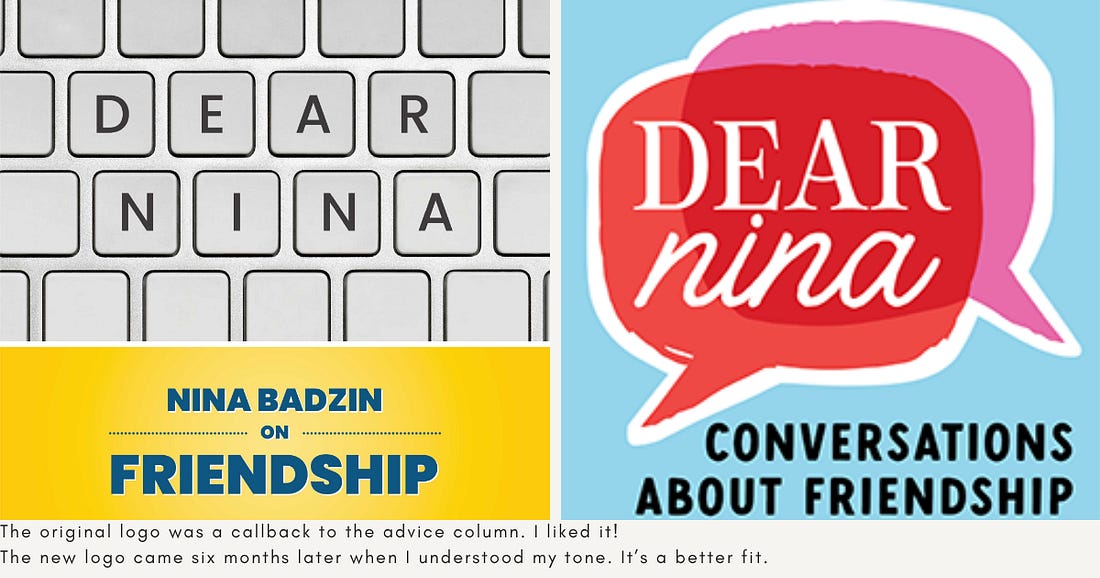
I’m giving you the basics of how I built Dear Nina: Conversations About Friendship into a top 1% podcast. Settle in because this is a long post. I didn’t build this thing overnight! The first three episodes dropped on July 26th, 2021. But the plannings started much earlier that year. If you’re looking for extremely nitty-gritty advice like why I switched podcast hosting services a few years in, this is not that post. You don’t want to read that post, and I don’t want to write it. What you’re getting is a higher level look at the process of being an independent podcaster—the trajectory that took me from thinking, “I’d like to start a podcast,” to where I am today. And while this advice is for building a podcast, some of the concepts are good for ANY project. Your “why” + your specific idea + the tools that will help you + the people who will assist along the way are important steps no matter what you’re creating. A NOTE ON GLOBAL RANKINGS: You can check a podcast’s global ranking on listennotes.com. To give you a sense, Amy Poehler’s Good Hang is at .05%; Call Her Daddy is .01%, This American Life is .01%. I’m proud, as an independent podcaster, to be sitting at 1%. There’s a universe between 1% and .01% and that universe tends to entail being a celebrity, having a mainstream network behind you, or having published episodes 3-5 times a week for the past decade+ with no break. Perhaps you’re thinking of starting a podcast OR you have a different creative project in mind. The broad strokes of these tips (and cautions) will apply as well. Let’s get into it. #1. You need a “WHY” and a very specific idea.Most (dare I say ALL) well-executed creative projects start with a “why.” Your why needs to go deeper than wanting recognition from family and friends or attention from the public. That’s out of your control. My WHY: Early in 2021, in the thick of COVID times, I decided to take my friendship advice column, which began in 2014 thanks to Jessica and Stephanie of the former HerStories Project, to the medium where more people were spending time—podcasts over websites. I felt strongly that my work was helping people. And to quote Arielle of The Little Mermaid, I thought, “I want to go where the people are.” I started listening to podcasts back in 2015 when Serial’s first season entered the cultural zeitgeist. So by 2021, I was long familiar with all kinds of formats and had a sense of how I’d structure my own show. I also had a really obvious WHY and seven years of content to draw from. My “why” and my “very specific idea” were one in the same: I’d help people with the friendship issues they were thinking about but too afraid to say out loud. I can hear you asking: Nina, doesn’t having a “very specific idea” mean it won’t apply to everyone? Yes. That’s the point. You cannot make a show for everyone. You need a topic you’re passionate about, that you can talk about endlessly (but also please learn how to edit). And that topic should either entertain, inform, or help others. Your number one question should be—What is the listener getting out of this show? You can ignore this advice and make a show about “tons of topics.” You’re creating a marketing problem for yourself, but maybe you’re a celebrity or NPR wants to produce your concept. Who am I to stop you!? #2. Let’s move onto the name, format, and logo.Notice I have not said one thing about technology yet. Before all that, which is for sure a whole thing and we will get there, you need a name and a sense of format. The format will likely help inform the name, which is why I lump them together. Do you want one host? Two? Will you have guests? Any and all of the above is fine and you can mix it up, but you need some vision here. “Dear Nina” would have not have worked if I wanted a co-host. Naming my show took some time. The “Conversations About Friendships” part was clear immediately because it’s literally what I would be doing—having conversations about friendship with authors, thought-leaders and regular people (like my mom) about very specific concepts within the topics of friendship, loneliness, and social connections. Just like in my advice column, I saw myself as a facilitator of these conversations and not as the “expert” per se. But “Conversations About Friendship” was too dry. (Yes, I named the Substack that, but I had my reasons. That’s for another post!) When choosing the name, I wanted a nod to the previous seven years of writing about friendship (now 12!!) and I thought my own name should be in there somewhere. While brainstorming with my friend, Julie Lyon, who was enthusiastic from the start, she said, “How about ‘Ask Nina?’” I liked that idea at first. But then I thought about the many emails sitting in my anonymous inbox for the advice column. All those emails started the same way—“Dear Nina.” I would not have thought of that without Julie’s suggestion of “Ask Nina.” Brainstorming with the right people is key! Quick bonus friendship tip: Talking about your not-yet-existent podcast with friends who #1. don’t listen to podcasts and #2. tend not to be that interested in your creative endeavors is not a good idea. Resist the urge! YOUR PODCAST NAME:
YOUR SHOW’S LOGO: Once you have a name, you can think about the logo. Yes, you need one. You cannot upload your show to a hosting site, which then distributes your show to Apple, Spotify, etc, without a correctly sized graphic. Don’t worry, you can change your logo! My original one looks nothing like the current one. Both of my logos were created by graphic designers. You can make a logo for free on Canva.com.
#3. Now you have to get technical AND make lots of boring decisions.I’m not going to lie to you, this is the hard part—mostly because there are so many options and you can get trapped in analysis paralysis. The learning curve is steep, but don’t give up!
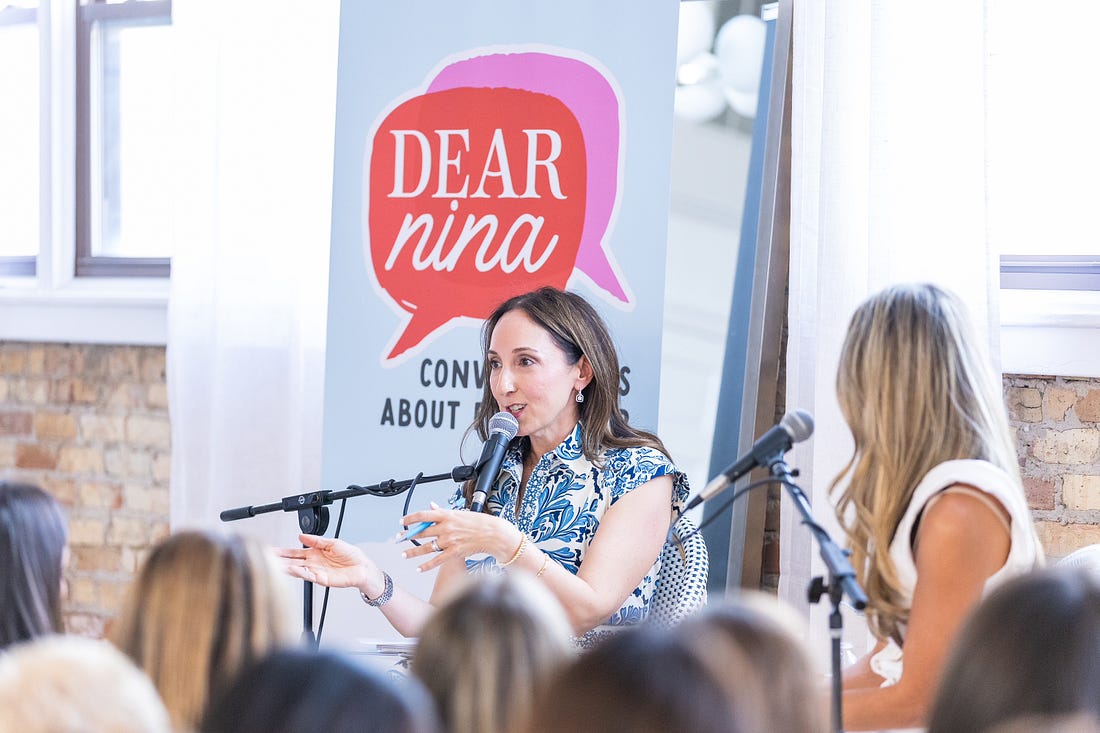
I was very lucky that my wonderful brother-in-law, Dave Dluger, is a sound technician and he said something like, “I will help you get started with the recording and editing part.” You probably aren’t lucky enough to have someone like Dave in your life, but maybe you know another podcaster who can point you in the right direction. (Please don’t ask a podcaster ANYTHING unless you’ve done some research. Even before Dave started helping me, I’d watched tons of YouTubes to get familiar with the options out there and I had picked out a hosting site, had my “why,” my name, and was working on a logo and music all on my own.) Dave, who does not live in the same city as me, decided I’d record on Riverside instead of Zoom. Like I said, there are lots of options for recording, editing, making clips and so on. They all have their pros and cons and there are new options popping up all the time. You can Google or “Chat” that as the options are ever-changing with AI on the scene. There’s personal preference involved here just like with any techie stuff. Dave is my hero for saying, “Sign up for a Riverside account” and also for sending me links to the not-at-all-fancy headphones, microphone, and mic arm I still use today. I eventually added a camera and a light. He also edited my first few months of episodes until I was ready to edit on my own. I was scared to edit the episodes myself until my friend Pam let me watch her edit on Descript and within minutes I realized I could do it too. I know that was a lot. I’m trying to show you that #1. There is not ONE way to record, edit, and distribute your show. #2. You will need some help along the way—and that help might come in the form of online guides. Riverside and Buzzsprout both have fantastic guides on YouTube. I used both guides often during the planning stage. And I still use YouTube when I run into an editing question on Descript. AN IMPORTANT NOTE ON EDITING: I firmly believe all episodes need editing. Throwing your raw episode up is like publishing the rough draft of an article. It’s respectful to the listener to make some edits and it creates a better show. You don’t have to edit yourself. You can hire people, but that gets very expensive for a weekly show. I’ve tried hiring people here and there, but I’ve become a good editor and I don’t think anyone other than me understands what I’d want to keep or cut. I would not rely on AI to edit your episodes. You can certainly use basic AI within your editing software to take out obvious things like “um.” But deeper editing requires the human brain. THE “GOOD ENOUGH” FACTOR: What Dave did for me, you will need to do for yourself if you don’t have someone to help you. And that is, you will have to eventually say, “This mic, these headphones, these first episodes—they’re good enough.” That’s true for everything—the logo, the music (I paid my kids’ guitar teacher to compose my intro music!), the editing, and so on. GOOD ENOUGH is gold in this process. You will get better. Just get going. #4. Marketing your showYou’ve gone to all this trouble to create a show, now you need to tell people it exists. Social media is an obvious place to start. Just be aware that getting people to click away from the drug that is social media to their favorite podcast listening app is a very tall order. Think of social media as a way to let people know about your show, but it might not translate to episode downloads. My traffic comes from a combination of sources: Google SEO (remember I’ve been writing about friendship since 2014), Instagram, TikTok, Facebook, and more than anything—word of mouth. #5. Adding to your teamAs the show grew, I realized I needed help. A listener, Rebekah Jacobs, had been sending thoughtful emails after some episodes and even joined me early on to talk about our favorite friendship-themed novels. We clicked quickly, so after relying on her input more and more, I asked her to officially join as my assistant producer. Now she helps vet guest pitches (we get MANY), think through upcoming episodes, dream up future ideas, and partner with me for the live shows. I’d be pretty lonely doing this without Rebekah at this point! Speaking of lonely, in episode 191, “The Case for Work Friends and Where to Find Them When You Work Alone” I spoke to Lindsay Pinchuk whose networking group I joined last year called The Dear FoundHer Forum. Her group has some podcasters along with lots of other women running their own operations. We have monthly Zooms and other opportunities to learn from Lindsay and from each other. It’s from Dear FoundHer that I was inspired to plan my first live event in Chicago in July 2025. I’m having my second one in Minneapolis in July 2026. (Tickets will be on sale in early May.) I never would have imagined such a thing when I first started. #6. Topics that are too next level for this post
What podcasting questions do you have? Write them in the comments. I will try to help!
Let’s connect outside of this newsletter: You can find me most often in the Facebook group, Dear Nina: The Group. All the social media links are below. I know I need to get rid of some them! Instagram | TikTok | YouTube | LinkedIn | My Website
You’re a free subscriber to Dear Nina: Conversations About Friendship. Curious about those once-a-month emails behind the paywall? The anonymous letters (and my answers!) come from the rawest places of friendship uncertainty. They deserve the most sensitive readers who are not going to roll their eyes, leave troll-ish comments, or make the letter-writer feel foolish for asking. If you’re willing to upgrade to this part of the newsletter, I know you’re there with the best of intentions to be part of a community that’s not afraid to ask the tough questions and who will read the answers with an open heart and an open mind. If that’s you, join us! I’d love to have you there.
|










No comments:
Post a Comment