Cigarette smoke and sticky floors. Grand performance and tragedy. A place where the bathroom sink was chest-level and the corners rarely saw light.
There's a parking ramp on the piece of land where the Pomp Room used to stand. But for a time—briefer than the myth would suggest—a cobbled-together bar at the corner of Eighth Street and Dakota Avenue hosted music magic.
If not magical, at least memorable.
The Pomp Room was more than a busted-up old bar. It was the zenith of a subcultural evolution in Sioux Falls that started in the 1980s in garages and basements and ended on New Year's Eve, 1998.
*
Duane and Jeannie Ertz bought the Pomp Room on April 1, 1971. By then it had gone through several iterations since first opening as the "Pump Room" in 1958, a few blocks away on South Main Avenue. However, the Pump Room was already a much more famous club in Chicago. A letter from the lawyers in the Windy City was enough to convince owners Chris and Mae Miller to change the name.
The simple solution was to replace the "U" with an "O" on the sign, and the Pomp Room was born. It was a novel enough approach that it warranted a photo and story in the Argus Leader. In 1963, it moved a few blocks from Main to Dakota Avenue. When the Ertzes originally bought the Pomp Room, it was a country music bar. Then there was something of a dance phase. A few years later, the genre switched to rock-n-roll. At first, it was just one small piece of a five-building complex.
For a time—briefer than the myth would suggest—a cobbled-together bar at the corner of Eighth Street and Dakota Avenue hosted music magic.
There was a bookstore and a radiator shop, among others. Gradually, rock-n-roll pushed out the other businesses. The Ertzes tore out the radiator shop to make room for a drive-up liquor store on the north side. They added on to the back of the former bookstore as well, creating a collection of levels and nooks rather than the open floor plan one might expect for live music. But that worked—the grit of the club fit downtown Sioux Falls in the 1970s, which was not a destination for the well-to-do.
A wave of urban renewal in the previous decade demolished many of the old buildings and created the ill-timed "downtown mall," which closed Phillips Avenue in an effort to bring more pedestrian traffic to the area. It failed, and businesses moved south to the shopping centers on the Forty-First Street corridor. The bars stayed, creating an entertainment district that included dance clubs—disco and erotic—gritty country joints, and more than a few low-level watering holes. Frontier, Arrow, Silver Moon, Rainbow, Sportsman's. These were not the swanky cocktail clubs that populate downtown today.
This was the marketplace the Pomp Room occupied, which was something the Ertz family did not apologize for. They were West River ranchers who weren't afraid of the hard edge in search of profit. By the mid-1980s, downtown was changing again, particularly along Phillips Avenue from Ninth to Fourteenth Streets. It was slow at first. The area, nearly abandoned by commerce, was sensing a bigger national wave of city-core rehabilitation focused on specialty retail and entertainment.
In the bar business, a seismic shift was about to hit. The campaign to reduce drunk driving led to the phased increase in the legal drinking age from eighteen to twenty-one, which was completed in 1988. Then the South Dakota legislature approved expanding the state lottery to video terminals the following year. The combination of the two shrunk the pool of potential customers and changed the nightlife dynamic.
he number of traditional bars serving spirits was—and is—capped by state law based on a community's population. Video lottery outlets needed only a beer or wine license, which doesn't have the defined cap. Lottery operators couldn't open fast enough. Live music as an entertainment option faded in the glare of the video screen. The old dives began closing one by one, replaced by newer buildings and more desirable tenants.
The Pomp Room carried on, catering to a crowd unburdened by convention or expectation. For many years, the bar opened at midnight on Christmas—technically December 26—to give those who needed it a place to get away. When the clocks turned back in the fall, it stayed open an extra hour until what would have been 3:00 a.m. Why not?
*
The Ertzes didn't create a music scene. They didn't foster the demand for live performance by the artists who crafted it. That was a product of forces larger than one bar in downtown Sioux Falls. It was a critical mass of like-minded young people looking for something, somebody, with which to connect. Along the way there were countless concerts staged in unlikely places just because the space was available. Ska punks and power poppers, who later would become international superstars, such as Green Day, the Offspring, and Neurosis, showed up in vans to play for all ages in the basement of the Nordic Hall because other bands told them there was a guy—then-teenager Terry Taylor—putting on shows in Sioux Falls.
Young adults followed the trail of pre-internet handbills to find local music at the Crow Bar, Charlie's, and Phil's Pub. But to make the leap from teenage dreams to a social scene would require something greater. A triumvirate of forces came together in the late 1980s when a wave of aspirational bands and artists made original music. There was publicity starting with fanzines and then Tempest Magazine, a newsprint tabloid featuring arts, entertainment, and commentary in 1989.
The old dives began closing one by one, replaced by newer buildings and more desirable tenants.
That combination revealed to the managers of a few smaller venues—searching for a way to stand out in a video lottery landscape—an audience worth catering to. That's how the MadHatter Pub, on the main floor of the then-vacant Carpenter Building on Phillips Avenue, began booking local bands playing original music such as Flag with Hank, Janitor Bob and the Armchair Cowboys, and Children.
The MadHatter begat the LimeLite, and the crowds grew when local promoter John Steever began bringing more regional and national touring acts to the club. By the time the Argus Leader launched a weekly entertainment tabloid in early 1993, all the pieces were in place. For a couple years, the Pomp Room and the LimeLite rode the Generation X wave of live music. But the bar game isn't for the weak, and Gen X is not the Baby Boom. Gene and Audrey Jones owned the LimeLite, and they sold the building on North Phillips Avenue to the City of Sioux Falls in 1994. Today, that building is the Anne Zabel Actor's Studio, connected to the Orpheum Theater. That left only the Pomp Room as a larger venue for local and regional bands.
It wasn't an easy path to glory.
The Pomp Room's reputation was that of a tough joint. Rugged and road-weary Harley-Davidsons often lined Dakota Avenue in front of the bar. That reputation reached its low point in October 1990 when a Pomp Room bouncer was stabbed and killed outside the club. Ward Ertz took over management of the club for his family. Eventually, he booked touring acts that could attract enough fans to fill the bar, and he picked up local bands that had been playing a couple blocks away at the LimeLite.
In late 1993, the vibe at the Pomp Room was shifting. And if a marker of that shift is available, it's perhaps Sunday, November 28, when Janitor Bob and the Armchair Cowboys first took the stage. Why this date? Janitor Bob was a guitar-driven power pop band. While they could grind it up with the best of them, there was a hippy sensibility with roots in one of their earliest tunes, "The Happy Song." Their crowd was tie-dye, patchouli, and clove cigarettes. And it was usually a big one.
The band was based in Sioux Falls and toured regionally. They were popular on college campuses and even had some radio airplay. Violet, a band with a similarly loyal following, led by iconic Sioux Falls songwriter Rich Show, also shifted to the Pomp when the LimeLite closed. That opened the door for other acts of different genres, including the all-ages events that had been booted from the Nordic Hall. For the next five years—until the Pomp Room closed for good on New Year's Eve 1998—Sioux Falls enjoyed a variety of local, regional, and national live music in a setting that today seems all but impossible.
It was a good run.
In addition to the local and regional bands—including the hard rock stalwarts with roots in an earlier time, such as Crash Alley and Wakefield—the schedule included an impressive list of notables. It's chronicled in the Pomp Room's ads in the archives of Tempest Magazine.
For a while, the hope and despair, the sweat and the tears, and all those memorable moments in the Pomp Room were the culmination of something.
Particularly in 1997 and 1998, you'll find names such as Cheap Trick, Steve Earle, Quiet Riot, Great White, Matt "Guitar" Murphy, Indigenous, the Bad Examples, Less than Jake, and the Jayhawks. Imagine counterculture stalwarts Danzig, Marilyn Manson, and Korn—on the same night. Fargo blues guitar phenom Kid Johnny Lang—when he was still a kid. The legendary bassist Mike Watt—cofounder of the Minutemen and Firehose. The most famous appearance, however, was in 1993, and it wasn't publicized.
That's when Aerosmith showed up.
With Steven Tyler and Joe Perry, their millions of records, they were the pantheon of American rock-n-roll and had played the Sioux Falls Arena on a Monday night. Then, in a made-for-music-television moment, they popped into the Pomp and ripped through a few tunes in a stunning moment that's captured in an MTV Rockumentary. There's Kurt Loder—famed MTV newsman—doing a stand-up on Dakota Avenue with the Pomp Room's signature logo glowing in the background. Cut to the stage as the band delivers "Momma Kin" and "Walk this Way" with all the gusto they'd brought to the stage of the arena a few hours earlier.
"I would say we were in our element," front man Steven Tyler says during the rockumentary. "It's like, people were right up in my face. That's kind of like where we came from. It's like spawning, getting back to where you once came from. That was it for us." Few people knew the plans for weeks ahead of that night, primarily Ward Ertz, MTV, and the band's management, but not many.
Still, the bar was packed, which wasn't unusual after a major concert like Aerosmith. You never knew what might happen. Members of the German megastar band, the Scorpions, took the stage one night. Metallica stopped in when they were in town. These things happened at the Pomp Room.
*
British singer Lloyd Cole once wrote, "Nothing very good or very bad will ever last for very long." He was rephrasing Douglas Coupland, of course, who wrote, "Nothing very very good and nothing very very bad lasts very very long," in the novel that labeled post-Baby Boomers as "Generation X." The same was true of the Pomp Room. It seems fitting that the last generation to enjoy it was Generation X, that dip on the wavelength of demographics, a trough of population, buffeted by the old guard before and the swelling of the next wave after.
The city was changing, and we were changing with it.
For a while, the hope and despair, the sweat and the tears, and all those memorable moments in the Pomp Room were the culmination of something. And maybe it was the very, very best we could ask for.
_____________________________________
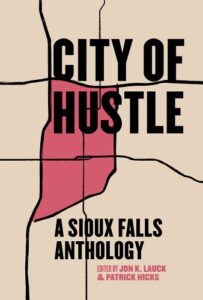
Excerpted from City of Hustle: A Sioux Falls Anthology, edited by Jon K. Lauck and Patrick Hicks. Copyright © 2022. Available from Belt Publishing.


No comments:
Post a Comment